Surge Protection and UPS for Central Florida Businesses: Surviving the Lightning Capital
Central Florida is one of the most beautiful places in the country to run a business, but it comes with a hidden tax on your technology: ...
Central Florida is one of the most beautiful places in the country to run a business, but it comes with a hidden tax on your technology: power. We sit in the lightning capital of the United States, and the daily summer storms that roll across the region do far more than knock out the lights. Every flicker, brownout, and nearby strike sends a jolt through your wiring that quietly chips away at the electronics your business depends on. Most owners never connect the dots until a server fails, a register goes dark, or a week of records vanishes.
At Think Tech Support, we help businesses across Orlando, Lake County, Clermont, Mount Dora, Eustis, Tavares, and Apopka protect their hardware and their data from the one threat almost everyone underestimates. The good news is that proper power protection is one of the cheapest and most effective investments you can make. Here is what every local owner should understand about surge protection and battery backup before the next storm rolls in.
1. Why Florida Power Is Harder on Your Gear
Florida averages more lightning strikes per square mile than any other state, and you do not need a direct hit to feel it. A strike a quarter mile away can induce a damaging spike on the utility lines feeding your building. Add in the routine brownouts that happen when the grid strains under summer air conditioning loads, and your equipment lives in a rough neighborhood. Computers, network switches, point of sale systems, and phone equipment are all designed for clean, steady power. The reality outside your wall outlet is anything but clean, and over time those small events degrade components long before they fail outright.
2. A Power Strip Is Not Surge Protection
This is the single most common mistake we see in local offices. The cheap multi outlet strip from the big box store splits one outlet into six, but most offer little or no real surge suppression. A genuine surge protector is rated in joules, which measures how much energy it can absorb before it stops protecting anything. Look for a unit rated at 1,500 joules or higher for desktops and at least 2,000 joules for servers and network gear. Just as important, surge protectors wear out. Every spike they absorb uses up their capacity, so a strip that has guarded your front desk for five Florida summers may now be nothing more than an extension cord.
3. What a UPS Actually Does for You
A UPS, or uninterruptible power supply, is a surge protector with a battery inside. When the power drops, even for a fraction of a second, the battery takes over instantly so your equipment never sees the interruption. This matters far more than people expect. A momentary blink that you barely notice on the overhead lights is enough to hard crash a server mid write and corrupt a database. A UPS smooths out brownouts, rides through brief outages, and gives your systems a safe runway to shut down properly during a longer one. For any business running a server, a network rack, or a point of sale system, a UPS is not a luxury. It is basic insurance.
4. Protect the Whole Chain, Not Just the Computer
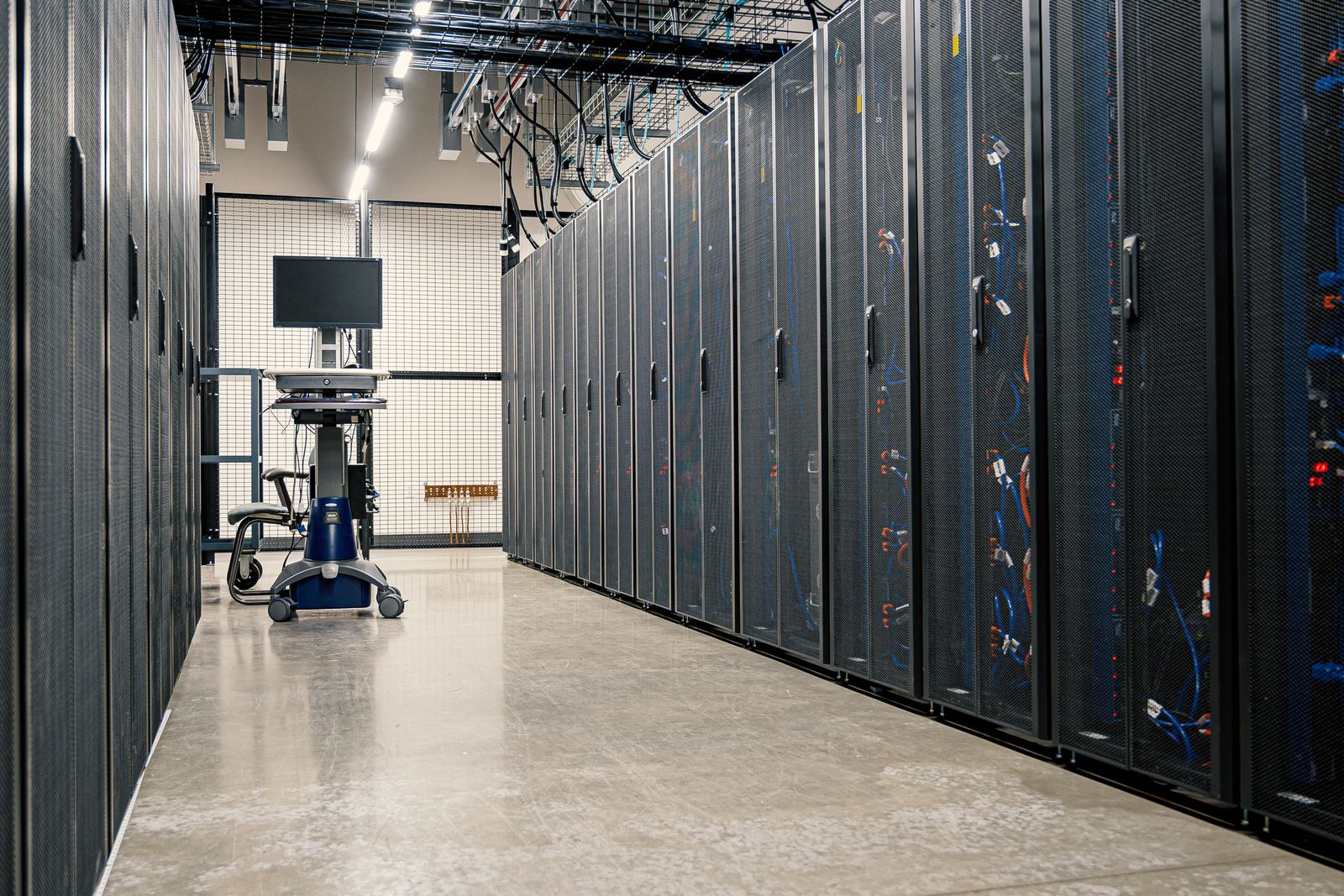
A surge does not care which device it travels through. We regularly see businesses that protected their main computer but left the network switch, the internet modem, and the phone system completely exposed. A spike that comes in through the coax line or the ethernet cabling can fry a router and take your whole office offline, even if every workstation was on a UPS. Real protection covers the entire path that power and data take into your building. This is one reason clean, well planned managed IT and proper cabling matter so much, a point we covered in our piece on server room wiring.
5. Surge Protection Buys You Time to Recover
Even the best protection cannot promise that nothing will ever fail, which is exactly why power protection and backups work as a team. A UPS keeps your systems alive long enough to save and shut down cleanly, and a solid backup plan makes sure that if the worst happens, your data is safe somewhere else. We have written before about why backups are non negotiable, and power protection is the front line of that same strategy. Surge gear stops the damage, and backups guarantee the recovery.
6. Replace and Test on a Schedule
Power protection is not a buy it and forget it purchase. Surge protectors lose capacity with every event they absorb, and UPS batteries typically last three to five years before they can no longer hold a useful charge. A UPS with a dead battery offers no more protection than an ordinary power strip, and most will quietly beep a warning that nobody is around to hear. Building a simple replacement schedule, testing your battery backups a couple of times a year, and labeling install dates on each unit keeps your protection real rather than theoretical. For a busy owner, this is the kind of routine task that managed IT handles in the background so you never have to think about it.
The Bottom Line
In Central Florida, power problems are not a question of if but when. The storms will come, the grid will strain, and the lightning will keep doing what it does best. The businesses that sail through are the ones that treated surge protection and battery backup as essential infrastructure rather than an afterthought. For a few hundred dollars of the right equipment, you can shield thousands of dollars of hardware and something even more valuable: the data and uptime your business runs on.
Worried your office is one storm away from a very bad day? Think Tech Support designs and installs reliable power protection and backup systems for businesses across Central Florida. Call us at (423) 486-6711 or reach out through our contact page for a free quote.